The Roles Weren't There, So They Built the Industry: How Actresses Took Control of Hollywood
For a century, actresses told they weren’t getting good roles did something about it. They founded the companies that decide which roles exist. Inside the actress-to-mogul pipeline.
The biggest film of 2023 was made by a company an actress founded. That is not a new story. It is a century-old story, and it runs from Mary Pickford to Margot Robbie, from Lucille Ball to Issa Rae. Inside the actress-to-mogul pipeline, and why the smartest women in film stopped asking for permission.
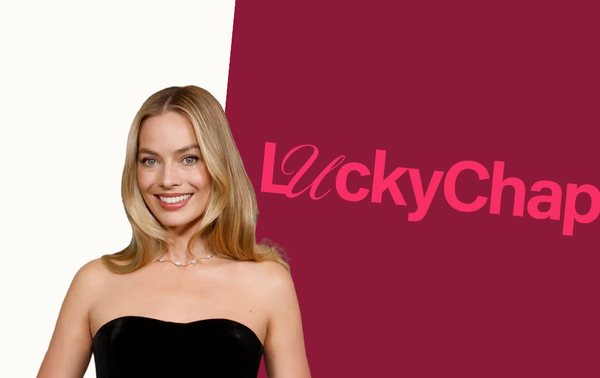
The highest-grossing film of 2023, Barbie, earned 1.446 billion dollars worldwide, and it was made by a company an actress built in order to tell the kinds of stories Hollywood kept refusing her. That company is Margot Robbie's LuckyChap, and the detail that should stop you is not the number. It is that none of this is new. Women in film have been plowing their way into power for more than a hundred years, first at the margins and now in the open, and the story of how they did it is one of the most important in the entire industry.
Call it the actress-to-mogul pipeline. An actress spends years being handed thin parts, watching the good roles and the real decisions go elsewhere, and eventually arrives at a single realization: the power was never in front of the camera. It was in owning the company that greenlights the film, approves the script, and decides who gets cast. What follows is a lineage of women who understood that, going back to the very beginning of Hollywood itself.
It started in 1919
The pipeline is almost as old as the movies. In 1919, Mary Pickford, the biggest star on earth, co-founded United Artists alongside Charlie Chaplin, Douglas Fairbanks, and D.W. Griffith, so that the artists themselves could produce and distribute their own films and keep the profits. Pickford did not stop at co-ownership. She ran the Pickford-Fairbanks Studio, where she personally approved scripts and hired her directors, writers, and crew, and she had leveraged her own box-office power to get there, with her pay climbing from ten dollars a day in 1909 to a quarter of a million dollars a film by 1919. As her biographer Scott Eyman put it, "She saw herself as a franchise, and she demanded more and more and more." A century before the current wave, the most famous woman in the world had already figured out the whole game.
Three decades later, Lucille Ball took it further. She and Desi Arnaz founded Desilu Productions in 1950, and after their divorce in 1962, Ball bought out his shares and became the first woman to run a major television production company. Under her, Desilu produced The Untouchables, Star Trek, and Mission: Impossible, shows that networks were nervous to back and that she greenlit anyway. The woman America knew as a comedienne was, in fact, one of the most consequential executives of her era.
The modern wave followed
The current boom begins with Reese Witherspoon, who built her power twice. Her first company, Pacific Standard, produced Gone Girl and Wild, two films she fought to make after optioning books nobody else would option for her. In 2016, she founded Hello Sunshine with an explicit mandate to put women at the center of the story, and it delivered Big Little Lies, The Morning Show, Little Fires Everywhere, and Daisy Jones and the Six. In 2021, Hello Sunshine sold to a Blackstone-backed media company run by former Disney executives Kevin Mayer and Tom Staggs, in a deal The Wall Street Journal reported to be worth around 900 million dollars. Her reasoning was never complicated. "I had seen for years how few good roles there were for women over thirty," she has said, "and thought: then I'll make them myself." Or, more bluntly: "I am my own best lottery ticket."
Margot Robbie founded LuckyChap in 2014 with Tom Ackerley, Josey McNamara and Sophia Kerr, built around elevating women's stories and staffing crews that reflected them. I, Tonya won Allison Janney an Oscar, Promising Young Woman won Best Original Screenplay, Birds of Prey crossed 205 million dollars, and Barbie became a global phenomenon. The side project became the company that handed a female director the biggest hit of the year.
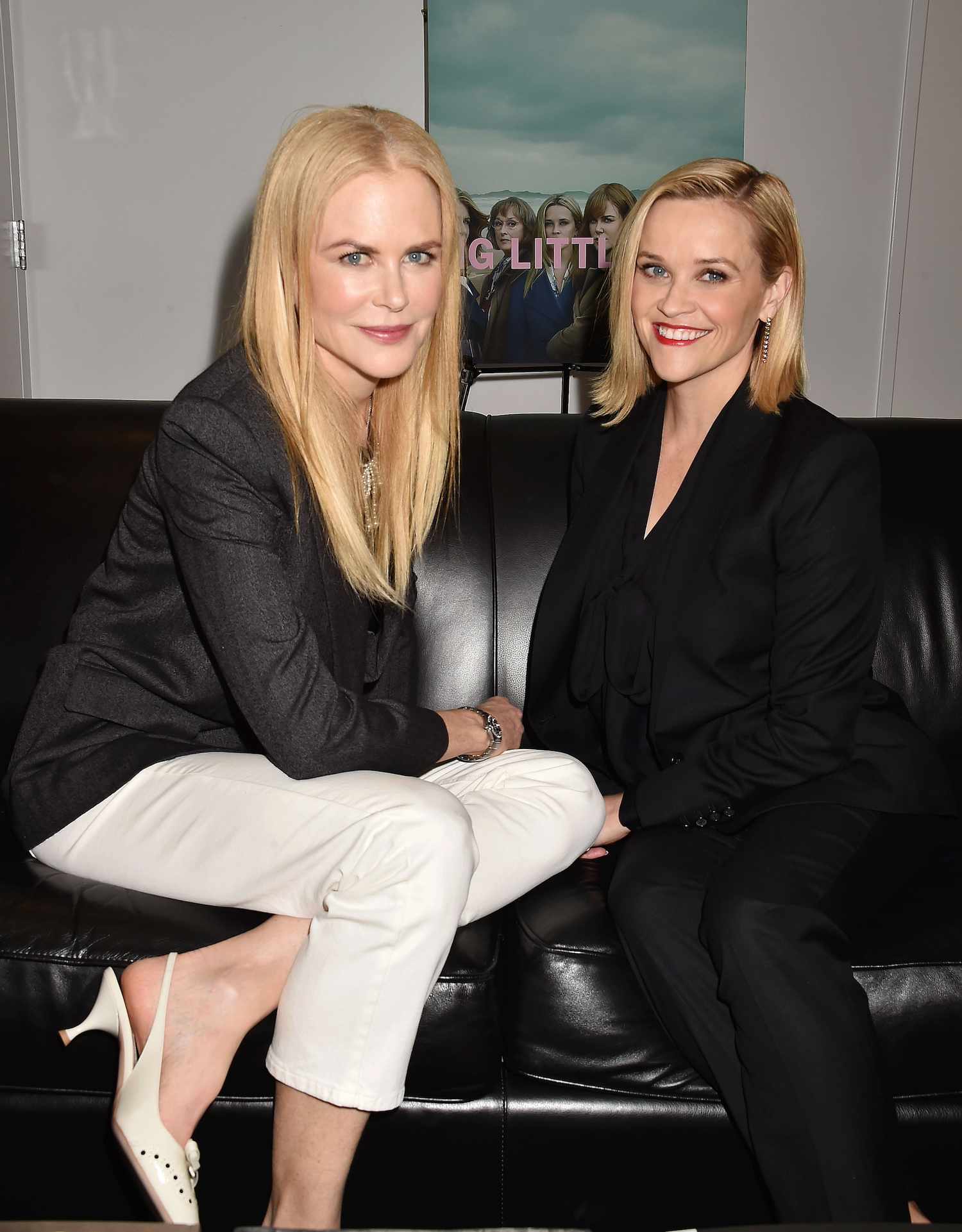
Nicole Kidman co-founded Blossom Films in 2010, and its credits include The Undoing, Nine Perfect Strangers and Expats. Its most telling credit, though, is shared: Big Little Lies was produced by Blossom Films alongside Witherspoon's Hello Sunshine, two actresses pooling the power of their own companies to make a show neither could have forced into being alone.
Nicole Kidman and Reese Witherspoon Credit: FilmMagic/FilmMagic for HBO
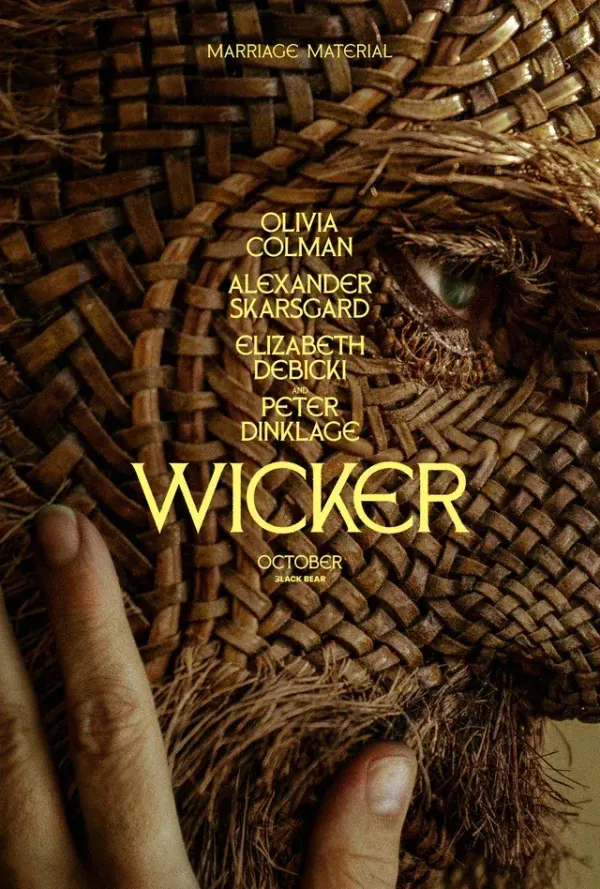
Natalie Portman was early, founding Handsomecharlie Films in 2008 for the oldest reason there is. She was not finding the roles she wanted and needed the freedom to create her own stories and back the filmmakers she believed in. Jennifer Lawrence followed in 2018 with Excellent Cadaver, whose slate refuses to chase the obvious: alongside Causeway and the comedy No Hard Feelings, it produced Bread and Roses, a documentary about women in Afghanistan directed by Sahra Mani. "I think that's when minds can be changed," Lawrence has said of documentary work, which tells you exactly what ownership buys an artist. It buys the freedom to make the film that matters rather than only the film that sells. And the newest name is one of the most exciting: Olivia Colman launched South of the River Pictures in 2019 with her husband, writer-producer Ed Sinclair, and the company already holds a first-look deal with Searchlight.
The women rewriting who gets to tell the story
If the pipeline has a frontier, it is here, with the women of color who built companies not only to find better roles but to correct an entire industry's blind spots. Issa Rae consolidated her empire under Hoorae in 2020, the home of Insecure, A Black Lady Sketch Show, and a record label, Raedio, all of it dedicated to putting Black creators in control of Black stories. Viola Davis and her husband Julius Tennon built JuVee Productions to tell the stories of the overlooked and to let Davis play the full range of women she was rarely offered elsewhere. Eva Longoria founded UnbeliEVAble Entertainment and used it to move behind the camera entirely, directing the feature Flamin' Hot. Kerry Washington built Simpson Street. Gina Rodriguez launched I Can and I Will Productions, naming the company after the mantra that got her through.
And the most instructive story of all may be Salma Hayek, who founded Ventanarosa and spent years fighting to produce and star in Frida, the Frida Kahlo biopic no studio would make for a Latina lead. She produced it herself, starred in it, and it earned six Academy Award nominations. It is the entire thesis of this piece in a single film: a role that did not exist until a woman built the company that could make it.
The real prize is the choice
What every one of these women actually bought was choice. When you own the company, you decide which stories get made, who sits in the director's chair, and which roles exist in the first place. You can cast yourself in the parts no one would offer you, the way Hayek did with Frida and Robbie did with I, Tonya. You can show yourself in a light the industry never bothered to light, as the complicated woman, the funny one, the furious one, the lead rather than the wife or the best friend. You can greenlight the documentary, the risky drama, the story about women the market has decided nobody wants.
According to the USC Annenberg Inclusion Initiative, women and girls made up just 32 percent of all speaking characters in the top films of 2023, and only around 30 percent of lead or co-lead roles, figures that have barely moved in years. For an actress watching the good parts go elsewhere, the conclusion writes itself. If the roles will not come to you, you become the person who creates them.
They are not alone
The roster keeps growing, and it is worth seeing all at once:
From Mary Pickford to Issa Rae, the thread never changes. These women were told, in one way or another, that the parts simply were not there. Instead of accepting it, they founded the thing that decides which parts exist at all. The seat at the table was never coming, so they built the table. And the most radical thing they did once they owned it was to start saving seats for each other.
Daria Ershova is the Founder and Editor-in-Chief of Filmoiselle. She's an entertainment and culture journalist whose film writing appears at Pop Tales and whose commentary has been quoted in Newsweek, Fortune, and British Vogue.
Comments
Courtesy of Focus Features, Working Title Films, November Pictures, Kiddo Films, Working Title and other relevant production studios and distributors.