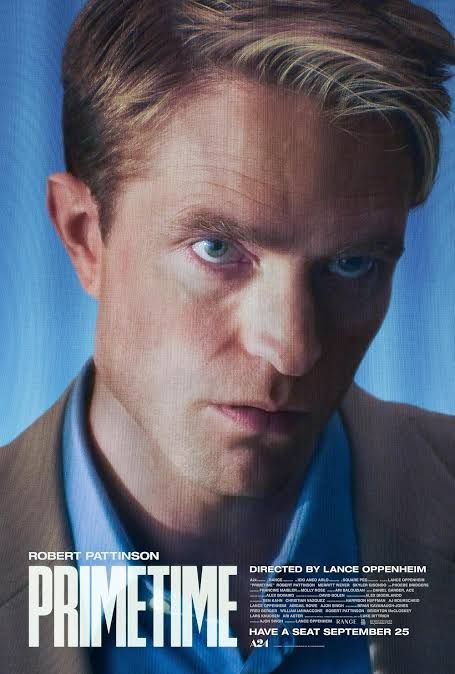
Four and a half stars. Lance Oppenheim's narrative debut turns the story of To Catch a Predator into something far stranger and more damning than a true-crime retelling.
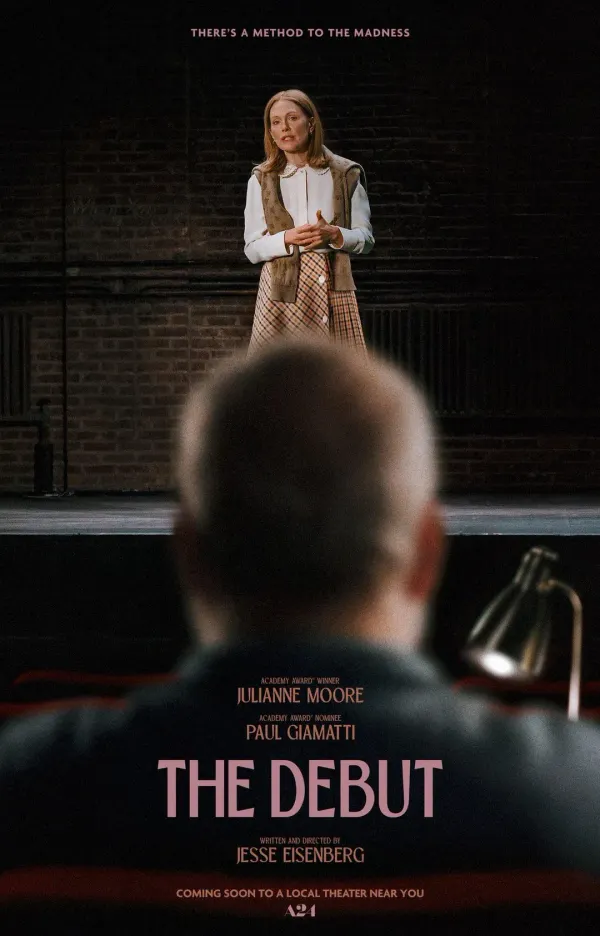
We caught Primetime at the 53rd International Film Festival, FEST, in Belgrade, where it screened ahead of its Serbian release through distributor Taramount Film. FEST, which has been bringing the most talked-about films in world cinema to Serbian audiences for more than half a century, built a formidable lineup this year, one that also includes The Debut, an early Oscar runner-up already generating serious awards buzz. Primetime, as it turns out, may well be heading in the very same direction.
There is a particular kind of unease that settles over you while watching Primetime, and it has very little to do with the predators its characters are ostensibly hunting. Lance Oppenheim, the documentary filmmaker making his narrative feature debut here, has taken the familiar spectacle of To Catch a Predator and excavated something far more disquieting beneath it, which is the realisation that almost nobody in this story is driven by the noble purpose they claim. What begins as a portrait of a hidden-camera sting operation gradually reveals itself to be an anatomy of American ambition at its most self-deceiving, a film in which everyone on screen is chasing a prize of their own while telling themselves they are serving a greater good.
At the centre of it all is Robert Pattinson, who continues to prove himself one of the most fearless actors of his generation by disappearing entirely into the role of Chris Hansen. This is not an impression, nor is it a caricature, but rather a full inhabitation of a man whose hunger for a bigger target, a greater catch, a more sensational piece of television, slowly curdles into something closer to the predatory instinct he claims to be rooting out. Pattinson plays complexity the way few performers can, living inside the contradictions of the character rather than merely gesturing at them, and the result is a performance that feels genuinely lived rather than acted.
What makes the film so compelling is how thoroughly it understands that Hansen is only one agenda among many. The producer wants her ratings and her legacy, the online vigilantes want their validation, and the decoy actors want their own small shot at relevance, with Skyler Gisondo's Dan nursing a dream of becoming a real performer even as he plays bait. Most damning of all is the film's suggestion that the machinery extends far beyond the show itself, with a Texas police department eager to parade Hansen's catches for reasons that have nothing to do with justice and everything to do with an election cycle and an internal agenda around a free-gun policy, turning the hunt for predators into a convenient piece of political theatre aimed at discrediting the opposition. Every single person in this ecosystem, the film argues, has arrived carrying a hidden motive, and the targets they catch become little more than the currency in which all these competing ambitions are paid.
Phoebe Bridgers, in her first major acting role, delivers something genuinely spectacular. As the decoy Del, she brings an unsettling naturalism to a character navigating the moral murk of luring people toward their own destruction, and she holds the screen with a magnetic presence that announces her as far more than a musician dabbling in film. And the surprise lands twice over when her original song, "On Video," plays the audience out over the end credits.
Oppenheim's background as a documentarian shows itself everywhere in the film's extraordinary visual language, which moves between a grainy, antique, almost degraded texture and sudden, sickly bursts of digital blue, as though the image itself cannot decide whether it belongs to the analogue past or the glowing, surveilled present. There is a haunted, hallucinatory quality to the whole thing as well, most memorably in the spectre that trails Hansen throughout, a figure glimpsed at the edge of the frame in every sting, tied to a past trip to India and the children who vanished there, a ghost of guilt that follows him from one predator to the next and refuses to let him believe in his own righteousness.
The film occasionally loses focus as it juggles its many overlapping storylines, a trace, perhaps, of Oppenheim's short-form instincts. But Primetime is a bold, lurid, genuinely unforgettable debut, a film that crawls under your skin and stays there, and it earns a resounding four and a half stars. Go in expecting a true-crime retelling and you will be surprised to find something far more interesting, which is a mirror held up to the rot beneath the righteousness. On this evidence, do not be shocked to hear its name again once awards season arrives in earnest.
 Daria Ershova
 Daria Ershova
Written by

Comments