The Oscars Finally Gave Casting a Trophy, and the Craft That Waited Longest Was Built by Women
A century into the Academy Awards, casting got its first Oscar this year. Four of the five inaugural nominees were women, because the job of deciding who gets to be seen on screen has always, overwhelmingly, been women's work.
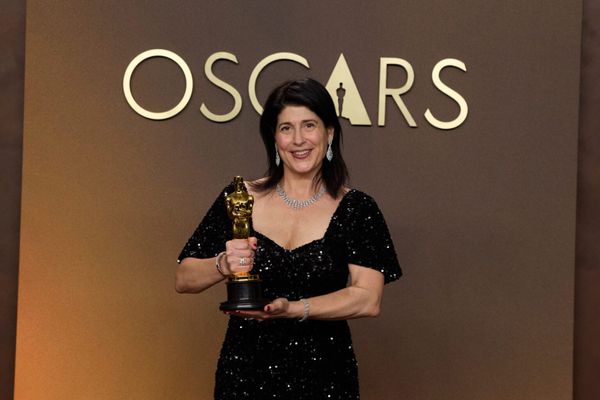
Cassandra Kulukundis poses backstage with the Oscar® for Casting during the 98th Oscars® at Dolby® Theatre at Ovation Hollywood on Sunday, March 15, 2026. WALLY SKALIJ, THE ACADEMY
On the night of March 15, 2026, at the 98th Academy Awards, Cassandra Kulukundis walked onto the stage to accept an Oscar that had not existed the year before. She won it for One Battle After Another, the Paul Thomas Anderson film that would go on to take Best Picture the same evening, and in doing so she became the first person in the history of the ceremony to win the Academy Award for Achievement in Casting. It had taken the Academy nearly a hundred years to decide that the people who choose the faces in every film they honour deserved a category of their own. The craft it kept waiting the longest is also the one women built, almost single-handedly, from the ground up.
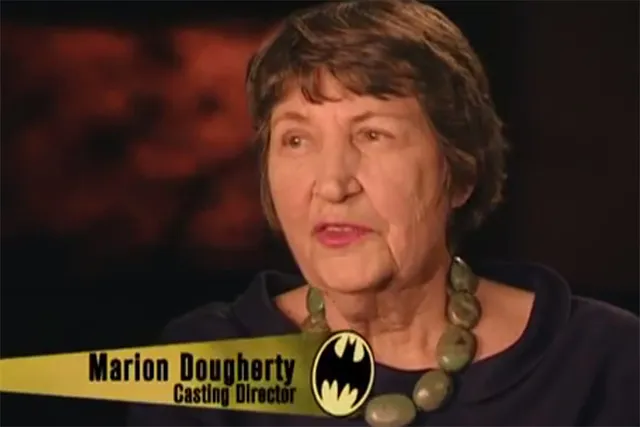
Casting has been one of the most female-dominated crafts in the industry for as long as it has existed as a profession. When the studio system began to crack in the 1950s, it was a woman, Marion Dougherty, who reinvented what casting could be. Working out of New York, pulling actors from the theatre for live television and then for film, she had an eye for the strange and the unconventional, for faces that did not fit the mould the studios kept insisting on. The careers she launched read like a beginning of modern screen acting. Al Pacino, Robert Duvall, Dustin Hoffman, Jon Voight, Christopher Walken, Gene Hackman. She gave James Dean his first television role and discovered Bette Midler. Martin Scorsese, who knew her agency well, has said that more than ninety percent of directing a picture is the right casting. Dougherty is a large part of why that sentence is true.
On Midnight Cowboy, the film that won Best Picture in 1970, the producer refused to give her a main title credit, a decision he later admitted he regretted. A former president of the Directors Guild dismissed casting people as not really directors at all. For most of the twentieth century, casting director remained the only main title credit on a film with no corresponding Oscar category, while editing, costume design and makeup, crafts with their own deep traditions of women's labour, at least had their statuettes. The work that decided who the audience would fall in love with, who they would believe, who would become a star, was treated as administration rather than art. It is difficult to read that history and not see the sexism threaded all the way through it.
The fight for recognition was long, and it was mostly lost. A proposal for a casting Oscar was floated and rejected back in 1999. In 1991, Clint Eastwood and Robert De Niro each wrote to the Academy urging a special award for Dougherty, and nothing came of it. She died in 2011 without ever receiving one. The following year, the documentary Casting By laid the whole injustice out on screen, and in 2013 the Academy finally created a Casting Directors Branch, a professional home inside the institution that had spent decades pretending the job barely existed. Only one casting director, Lynn Stalmaster, had ever been handed even an honorary Oscar. The category announced in February 2024, and awarded for the first time this spring, is the end of a campaign that outlived many of the women who started it.
Alongside Kulukundis were Nina Gold for Hamnet, the British casting director whose work shaped the faces of a generation of prestige television, Jennifer Venditti for Marty Supreme, and Francine Maisler for Sinners. Four of the five inaugural nominees were women. The lone exception, Gabriel Domingues, was nominated for the Brazilian film The Secret Agent. In a year when the Academy finally opened the door, it was women who walked through it first, because they were the ones who had been doing the work all along.
Television, to its credit, has been shining a light on the casting department for far longer. The Emmys have honoured casting since 1989, when Lonesome Dove won the first award in the category, and in the decades since the Television Academy has expanded its recognition to cover drama, comedy and limited series, treating casting as the distinct discipline it always was. For thirty-seven years, the small screen gave this craft a trophy while film kept insisting it did not merit one. If you want a clean illustration of how the industry undervalued casting, it is this: the medium long dismissed as film's lesser sibling was the one that got it right first.
What makes casting such a resonant thing for women to have claimed is that the work itself is an act of deciding who gets to be seen. A casting director sits in the one chair that determines which face carries the story, which actor is believed and which is passed over, who becomes the lead and who stays the best friend. It is a power that shapes the culture from behind the credits, invisible to the audience and absolute within the room, and it has rested, for most of a century, in the hands of women whose names audiences never learned. The Oscar does not change the work. Dougherty was doing the work at the height of her powers with no statuette coming and no title credit offered. But it changes the record. It says, in the language the industry takes most seriously, that choosing who we watch is an art, and that the women who have held that art together, with no trophy and little credit, were right to believe it mattered.
The Academy Award for Achievement in Casting was announced on February 8, 2024, and presented for the first time on March 15, 2026, at the 98th Academy Awards. Cassandra Kulukundis won for One Battle After Another.
Daria Ershova is the Founder and Editor-in-Chief of Filmoiselle. She's an entertainment and culture journalist whose film writing appears at Pop Tales and whose commentary has been quoted in Newsweek, Fortune, and British Vogue.