The Filmoiselle Interview: Ashley Robinson on Learning the Industry at a Legend's Hip
Ashley Robinson learned to produce by shadowing a Hollywood legend, then built her career out of Texas on purpose. She talks producing, genre, AI, carving out space as a woman of color, and the free resources the industry would rather you never found.
The Texas producer learned the business shadowing Gale Anne Hurd across a hundred episodes, built a career far from Los Angeles on purpose, refuses to be boxed into a single genre, and spends a surprising amount of her time telling other filmmakers about the free resources the industry would rather they never found.
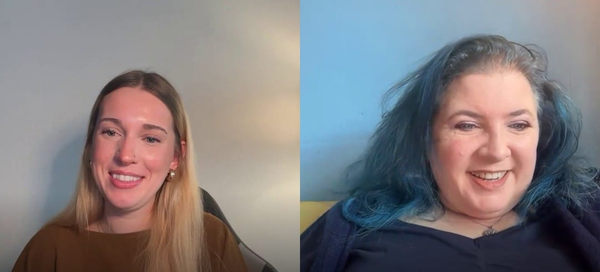
Watch full conversation on our YouTube
Ashley Robinson sits in an unusual spot in this industry, with one foot in studio production and the other inside the machinery that decides where productions get made, and both of those vantage points were earned the hard way. Today she works at the Texas Film Commission, the state agency that helps lure films and series to Texas and runs its incentive program, while continuing to produce her own shorts and develop two television series she describes, with obvious affection, as her babies. But the education that got her here began almost by accident, in an office she walked into believing she was there to talk about a movie about giant bats.
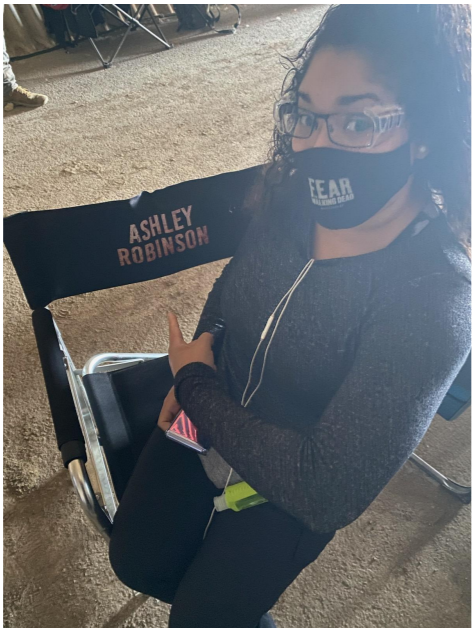
That was 2017, and the vagueness was deliberate. Ashley thought she was interviewing for an executive producer's assistant role on an adaptation of the ‘campy 90s creatures’ feature of that name, because the listing had been scrubbed of anything that might give the real project away. "They obviously didn't have the name Fear in the interview stuff," she tells us, "because they didn't want people to fangirl. Walking Dead fans are, sometimes, a little crazy." It was only once she was inside the building that she understood she had wandered onto a ‘Fear The Walking Dead’ production, and only once she clocked whose office she was standing in that the scale of the thing landed on her. The woman across the desk was Gale Anne Hurd.
If the name does not register, the work will. Hurd runs Valhalla Entertainment, co-wrote and produced ‘The Terminator’, and is the producer who brought ‘The Walking Dead’ to AMC in the first place, which is to say she is one of the most consequential producers alive. "I had to take a step back once I saw it was her office," Ashley says, and the admiration has not dimmed in the years since. "She's truly a badass." Hurd hired her in the room that day, and in doing so handed Ashley the apprenticeship that no film school syllabus can replicate.
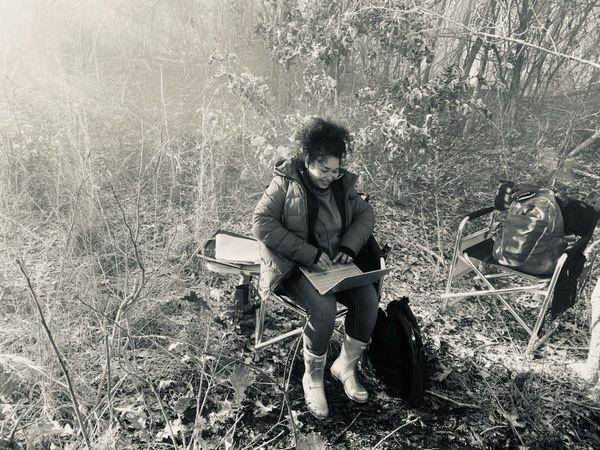
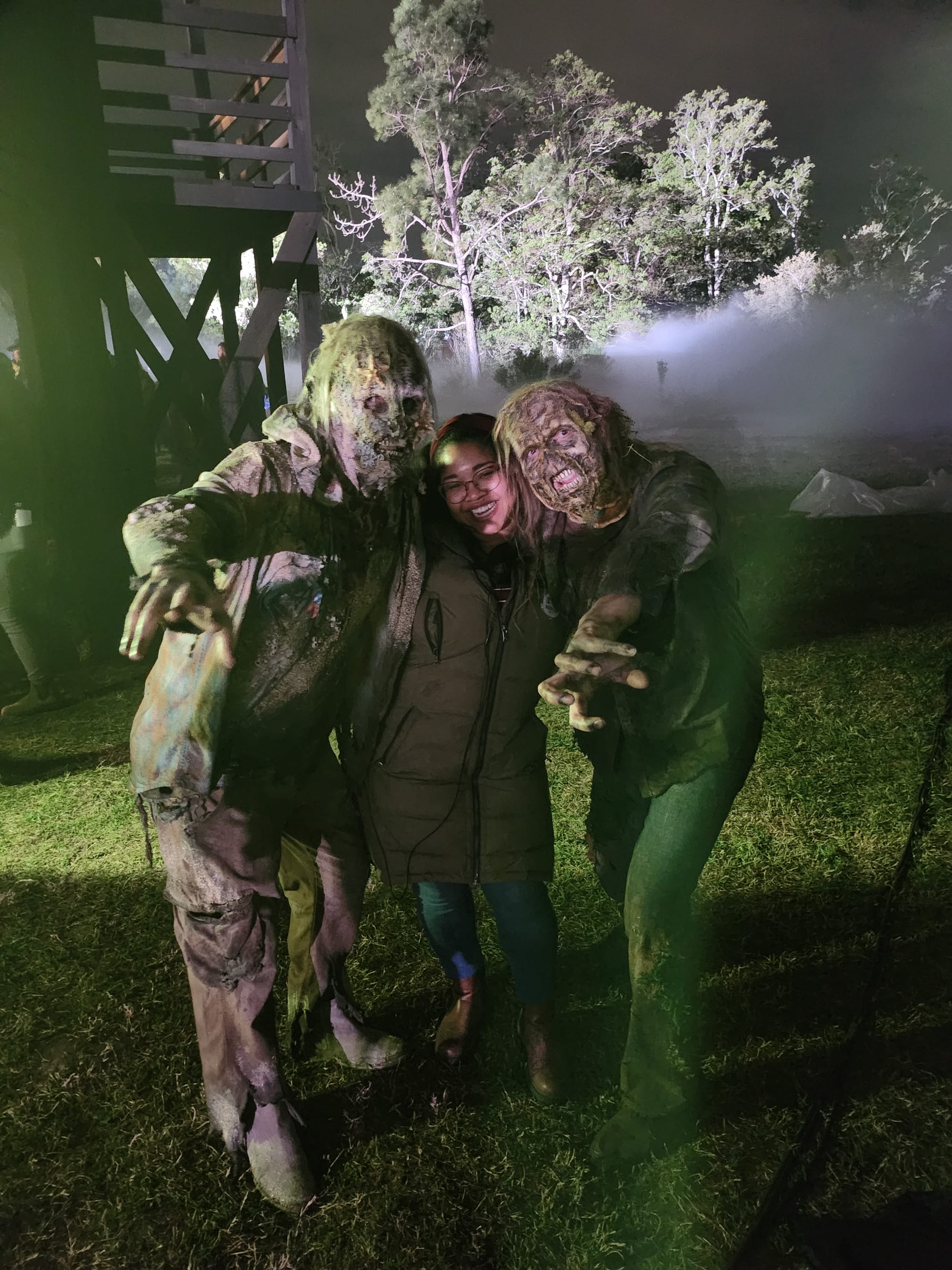
Season 7 of Fear The Walking Dead in Austin, TX
An apprenticeship in two chairs
Because Hurd works several projects at once and is forever in motion between states and her production company in Los Angeles, Ashley became one node in a whole network of her assistants, and when Hurd was travelling, Ashley also picked up a second desk for the show's producing director, Michael Satrazemis, the man known on set as Mikey, who directed episodes and shepherded incoming directors so the whole series held together tonally. Running two producers at once sounds like a logistical headache, and it was, but it also meant that the entire anatomy of a television production was laid open in front of Ashley from two angles at the same time.
With Hurd, she sat in on every meeting, studied every budget, and spoke to every vendor and every department, absorbing the producer's view of how a show actually gets willed into existence. With Satrazemis, she shadowed, by her own count, more than a hundred episodes, watching the director's craft take shape take after take. "I really got a hands-on how to produce and how to direct," she says, and the understatement is doing a lot of work. Fear the Walking Dead was, as she freely admits, a punishing show to make, but that difficulty turned out to be the point, because a production constantly solving problems is a production constantly teaching anyone paying attention. She learned stunt work and practical effects, and above all she learned to pivot. "We had many, many fires on set, so learning how to come up with ideas that are cost-effective, safe and efficient on the fly really became an integral skill."
Texas pressure-tested that instinct in ways few other places would. The state's sheer range of landscapes meant the production could stand in for almost anywhere, a versatility Ashley clearly delights in, with one firm exception. "We have a lot of varied landscapes, so we can double for pretty much anything," she says. "I always joke, anything except New Orleans, because I don't think anything can double for New Orleans." The flip side of all that geography is the state's capacity for weather at its most extreme, and nothing illustrated the point more sharply than the catastrophic Austin freeze that struck in the middle of active filming, the one that knocked out power and stranded people across Texas. Production shut down, but what Ashley remembers is not the disruption. It is what the crew did in response, as writers and above-the-line staff pooled their own money to help colleagues whose pipes had burst or who had been injured trying to reach safety, with Ashley helping to coordinate the effort. "We call ourselves fear family," she says. "We would always be there for each other. It's a type of atmosphere I don't know I would have been able to find elsewhere at that level of my career."
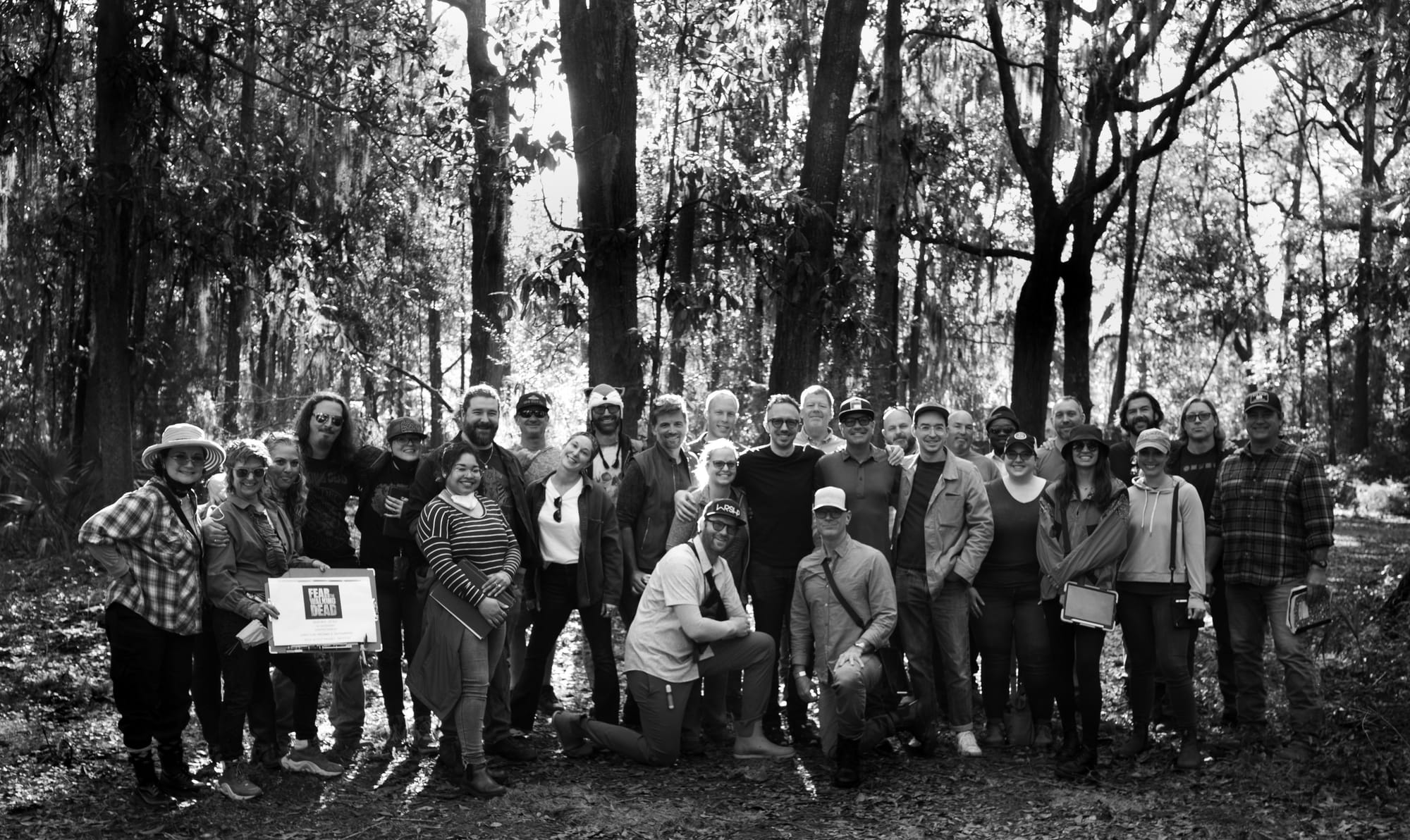
Season 8 of Fear The Walking Dead in Savannah, GA
The rise, and the reason the industry eventually struck
The people above her kept pushing her upward, and the way she climbed is itself a small lesson in how the business really works. On the recommendation of Hurd and Satrazemis, she moved into an associate producer role, and from there into co-producer, and the circumstances of that second jump double as a tidy explanation of the grievances that would later send the whole industry out on strike. AMC, she says without much hedging, was being careful with its money and would not send its writers to set, so Ashley and another producer were elevated to act as the eyes and ears of a writers' room that was not physically present. She holds that experience with a striking amount of grace, grateful for what it gave her while refusing to pretend it was how things should have been. "Had that not been available, I wish our writers could have been there," she says. "But I would not have been able to get the access and the creative control I had that early in my career." She closed out the series in its eighth season with a co-producer credit to her name.
The show wrapped shortly before the strikes began, production contracted across the board, and Texas, which is not Atlanta or Los Angeles or New York, felt the drought more acutely than the established hubs. Rather than wait it out, Ashley found her way to the Texas Film Commission in 2024, a state agency run out of the office of the governor, and for someone who describes herself as politically engaged, the move into a more bureaucratic world has been its own fascination. "I find it interesting to watch the cogs of the machine," she says, "how people can use their political authority as citizens to create change." The role has not slowed her own output either, and she has turned out six or seven shorts since arriving while continuing to develop her two series.
"It's sad to see the legacy studios disappear and the work dry up when there's so much creative genius out there."
A career built in Texas, on purpose
None of this was for lack of options elsewhere. A University of Texas at Austin graduate, Ashley did a semester in Los Angeles through the university's study-abroad program, then moved out there for roughly a year and a half after graduating, and she loved it, picking up the kind of weekend gigs the city makes possible, including PA work on Issa Rae's web series ‘The Misadventures of Awkward Black Girl’. In a detail she still savours as full circle, it was a networking event in Los Angeles that produced the interview that brought her back to Texas and to AMC. The trip west, in other words, is what sent her home.
She stayed home deliberately, out of a genuine conviction about where talent lives. "There are so many filmmakers out here who have great quality work and great experience," she says, and she reels off the evidence for a South that is already ascendant, from Atlanta's transformation into a production powerhouse to the indie energy still humming through Austin to Dallas, which has been drawing serious studio work since Taylor Sheridan relocated his productions there. Her ambition is expansive rather than territorial, reaching past Texas to the country as a whole. "I do think we should see work return to the United States as a whole," she says. "It's sad to see the legacy studios disappear and the work dry up when there's so much creative genius out there." Underneath all of it sits a single, firmly held belief, which is that geography should not be destiny for an artist. "People who are passionate about creativity can make it happen where they're at, if the infrastructure is created and the opportunity is brought."
The resources the industry forgets to mention
It is that word, infrastructure, where Ashley becomes genuinely, almost evangelically generous, because a good portion of our conversation turns into her patiently explaining the help that already exists and that hardly anyone uses. Film commissions, she points out, sit at every level from the regional to the national and span the globe, and they are very often free, funded by nonprofits or by taxpayers, which means their resources are already paid for and simply going unclaimed. Taking her own state as the example, she lists free location packaging for productions of any size, a license-plate database that lets filmmakers rent cleared plates from any era without paying for clearances, and the headline attraction, an incentive rebate that can return as much as 31 percent of what a production spends in Texas. The waste of all this sitting untouched clearly bothers her. "There are a lot of unused resources," she says, "because people just don't know about them." It is a refrain that runs through everything she recommends, and she asked us to pass the full list along, which we have done at the end of this piece.
Refusing the box
Ask Ashley why she will not be pinned to one genre, and she answers as both a strategist and an artist, because for her the refusal is at once a survival instinct and a craft. The advice she keeps hearing, not least inside the Blackmagic Collective's Studio Ready Initiative, the cohort of women with studio credits that she joined to work out her next move, is to diversify your spec scripts and prove to studios that you can operate anywhere. "As the industry constricts, being able to flip to any genre makes you an asset," she says, and she has taken the lesson to heart precisely because her instincts already pulled in more than one direction.
Her first love is horror, which she talks about with unguarded glee. "I love horror. I think it's fun, even the darker stuff," she says, praising it as both inexpensive to make and endlessly pliable, a genre roomy enough to hold horror comedies and horror action and even horror romances. But she has spent real time in comedy too, making web series with her frequent creative partner Ashlee Smith and now developing a half-hour comedy alongside Smith, the writer Tiara Williams, and a Houston-based actor from ‘Insecure’, and learning in the process how differently a multicam half-hour behaves from an hour-long drama, right down to the shape of the budget. That constant adaptation, she believes, has made her better at the whole job. "I'm able to adapt to whatever type of project we're making quickly, because I have the experience to do so," she says, before turning it into advice. "If you love dramas, still do a horror and a comedy spec. The studios want to see people who can do everything."
Ashely Robinson with the series' show runners, Andrew Chambliss and Ian Goldberg.
On AI, and the cost of not looking in time
Ashley is, by her own cheerful description, "kind of an annoying environmentalist," the sort with three sorting bins out at a house party, and she brings a similar clarity to the question of artificial intelligence. As a tool for efficiency, she has no real objection to it, and she can describe exactly where it earns its place. "If a VFX supervisor uses AI to smooth and filter and throw backgrounds into larger scenes and it cuts their time in half, that's what we should be using AI for." Her alarm begins where efficiency ends, and replacement starts, with the prospect of the technology becoming an industry standard before any rules govern it. "The way it's being used right now is taking away employment and voices from people," she says, singling out the practice of scanning an actor on one production and reusing their likeness on another without consent or payment.
Her argument is fundamentally a historical one, drawn from a mistake she believes we have already made once. We have seen, she says, what happens when a powerful new technology is left unexamined for too long, because we lived through it with social media and are still paying the bill. "Right now we've just signed a blank check to these companies," she says, "and they're doing whatever they can." The remedy she presses for is organised and specific. "I'm urging all my folks in unions to urge their leadership to say no to AI now, until regulations are passed and we can find ways to use it ethically, without barring people from jobs or using their likeness without consent or pay."
On being a woman, and a woman of color, as the industry contracts
Because this is Filmoiselle, we could not let her go without asking how the business has felt from where she stands, and her first instinct is gratitude, rooted specifically in having come up under a woman who sets the tone from the top. ‘ The Walking Dead’ productions, she says, run on genuine gender parity, something still rare enough to startle her when she describes it. "An equal number of men and women around the table and on set," she says. "You walk into the studio bathrooms, and there's a basket with menstrual products." She points to details that sound small until you notice their absence everywhere else, like having several mobile restroom facilities rather than the single unit many productions settle for on the apparent logic that the men can simply use the forest. "It's little things that go a long way," she says, "and it's a reflection of leadership."
"It's little things that go a long way," she says, "and it's a reflection of leadership."
She is considerably more sober about how far the industry still has to travel for people of color, for differently abled creatives, and for anyone pushed to its margins, and she does not pretend the direction of travel has been steady. "We made strides in 2018, 2019, especially 2020 after the George Floyd protests, and we've already taken twelve steps back," she says, citing the annual UCLA diversity report showing representation shrinking back toward where it sat a decade ago, a consolidation of ownership that has concentrated power in very few hands, and a political climate she experiences as openly hostile. And yet she refuses to leave the thought there, because the history she belongs to is one of people building their own rooms when the existing ones were closed to them. The Black-owned and Latino-owned platforms now letting creators reach audiences and get paid were, she notes, already in motion precisely because the old system had shut those voices out, and as audiences tire of rising prices and the majors falter, people are turning toward them in greater numbers. What she sees at ground level gives her more hope than the headlines do. "On the ground, I see everybody working," she says. "I see people carving out opportunities for themselves just by the quality of their work." She closes the thought with something Mikey told her about the last time the industry caved in on itself, in the Nineties. "He says we'll come out of this, and the people who have been consistent about sharing their work will have an abundant reel to show when opportunities arise again."
The resources Ashley wants you to have
As promised, here is the help she pointed us toward, nearly all of it free:
Black Magic Collective – a free platform for filmmakers, offering webinars, in-person events across the country, and cohorts tailored to different career stages, among them first-time television directors, women, and independent feature directors and producers. Ashley credits it with real connections and general meetings of her own.
Screen Global Production's film commission directory – the most extensive list of global film commissions she has come across, searchable by country, region or state, with each entry linking through to that commission's own site and resources.
Your local, regional, state and national film commissions – usually free, publicly funded, and stocked with resources most filmmakers never think to ask for, from location help to incentive programs.
What comes next, and the one piece of advice
Ashley is deep in development on her two series, and an earlier project, a television adaptation of ‘13 Ghosts’, sits in a holding pattern that is a maybe rather than a no while the industry waits to see how the latest merger settles. She also has a short heading onto the festival circuit, with hopes of a premiere at SXSW in March 2027.
Her closing advice is simply the philosophy that carried her through every turn of a famously unstable career, and it is as practical as she is. "We're in a period of perpetual hustle and flow, so keep hustling and flowing, because you never know what opportunities will arise if you're ready for the work when someone asks about it." She means it with total literalness, too, because even now, well inside a day job, she keeps an elevator pitch, a pitch deck and a working bible ready to go at any moment. "We don't know how this industry will shape out," she says. "It's always best to stay ready, because you never know how quickly that opportunity will come."
You can follow Ashley Robinson (@ashapaloooza) and her production company, Shortiegirl Productions (@shortiegirlproductions), on social media. This interview has been lightly edited for length and clarity. Watch the full episode on our YouTube.
Daria Ershova is the Founder and Editor-in-Chief of Filmoiselle. She's an entertainment and culture journalist whose film writing appears at Pop Tales and whose commentary has been quoted in Newsweek, Fortune, and British Vogue.
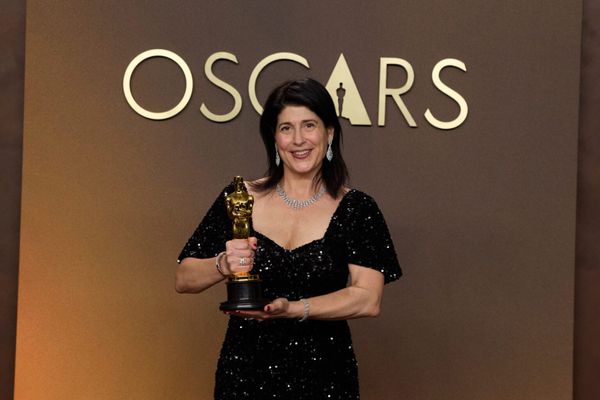
Cassandra Kulukundis poses backstage with the Oscar® for Casting during the 98th Oscars® at Dolby® Theatre at Ovation Hollywood on Sunday, March 15, 2026. WALLY SKALIJ, THE ACADEMY