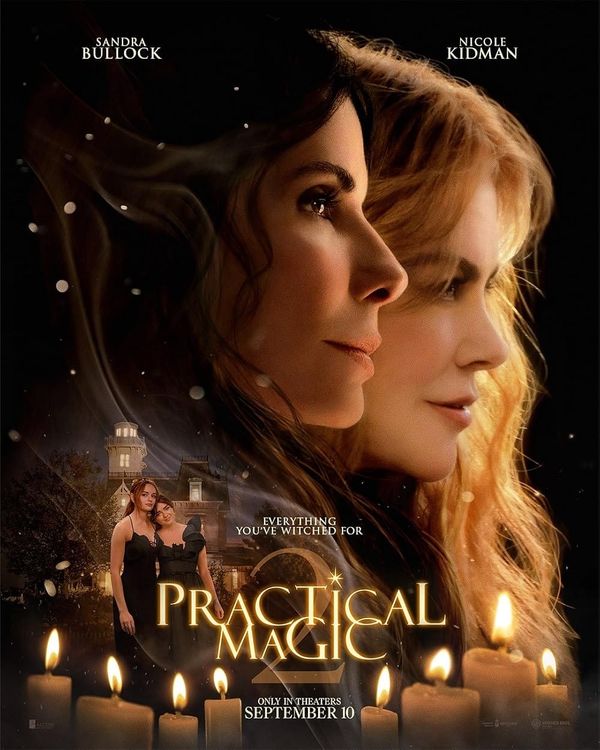
It was the first cool day of fall. Rain on the windows, sweater weather finally arrived, and a packed cinema full of millennials and older Gen Z who grew up watching the original on repeat. The men their partners dragged along were, by the third act, leaning forward in their seats. That is the Practical Magic 2 experience in one image – and no, the critics who caught prescreenings did not quite capture it.
The conversation around this film before it opened was, frankly, unpleasant. Much of the critical chatter centered not on the performances but on the appearances of Sandra Bullock and Nicole Kidman – the kind of commentary that reveals more about the commentators than the film. What we saw on screen were two women delivering emotionally present, deeply felt performances. Their faces communicated grief and joy and relief in ways that required no qualification. That conversation does not deserve more space than this sentence.
For those coming in cold: Practical Magic 2 follows the Owens women across two generations as a new threat tests the family's magic and the curse that has haunted them since their ancestor Maria Owens made a desperate deal centuries ago. Sally and Gillian must reckon with what it means to pass down magic – and its consequences – to the next generation of Owens women. The film moves between past and present with confidence, giving the younger characters room to establish themselves without sidelining the women we came for.
Susanne Bier's sequel understands exactly what made the original survive three decades of dismissal. The warmth of it and the girlhood of it. The feeling that magic is just another word for the things women know that nobody else does. The cinematography leans into that warmth rather than the cold slickness that plagues so many modern studio productions. This feels like a film made with genuine love for the source material and for the audience that has been waiting.
Bullock and Kidman step back into Sally and Gillian Owens as if no time has passed. The dynamic between them is lived-in and easy in a way that cannot be manufactured. Joey King and Maisie Williams, as the younger generation of Owens women, hold their own alongside two of the most watchable actresses working today. The torch passes convincingly.
And then there are the aunts. Dianne Wiest and Stockard Channing return as Aunt Frances and Aunt Jet, and if you grew up watching the original, you will need a moment to collect yourself when they appear on screen. They are exactly as magnificent as you remember. Their presence in this film is a gift – generous, funny, and deeply moving. A tearful goodbye is owed to both of them and to what they gave this franchise. We are not ready to live in a world where there are no more Owens aunts.
One small grief to acknowledge: those who know Alice Hoffman's novels will notice that Gillian's promised love story did not make it to screen. It is a real omission. But what Kidman delivers in its place is something genuinely interesting – a carefree, unanchored woman who loves without possessiveness and lives without apology. As a character choice it works. We can live with it, even if the book readers in the audience felt the absence.
The casting addition that nobody is talking about enough is Lee Pace. Covered in tattoos and looking like he was personally conjured by the Owens family to test their resolve, he is charming, warm, and moving in the quieter moments of the film. We are not saying we understand the curse on Owens women a little better after seeing him on screen. A wonderful addition to the ensemble.
The score carries significant emotional weight throughout, and when Landslide by Stevie Nicks plays, the theater collectively lost its composure. A needle drop involving Olivia Rodrigo's Poison in a film built around a generational curse on love is the kind of tonal decision that makes you want to applaud whoever made it.
The ending, the curse finally lifted, earns everything the film has been building toward. Not every moment between the opening and the closing lands with equal weight, which is why this is four and a half stars and not five. But the moments that work really work.
The theater was packed with adults. Partners who assumed they were being dragged to a witch movie found themselves on the edge of their seats. The original survived thirty years because women kept it alive. This sequel suggests the next generation is ready to take over.
★★★★½ For the girls. And for the husbands who had absolutely no idea they would be this invested.
Written by

Comments