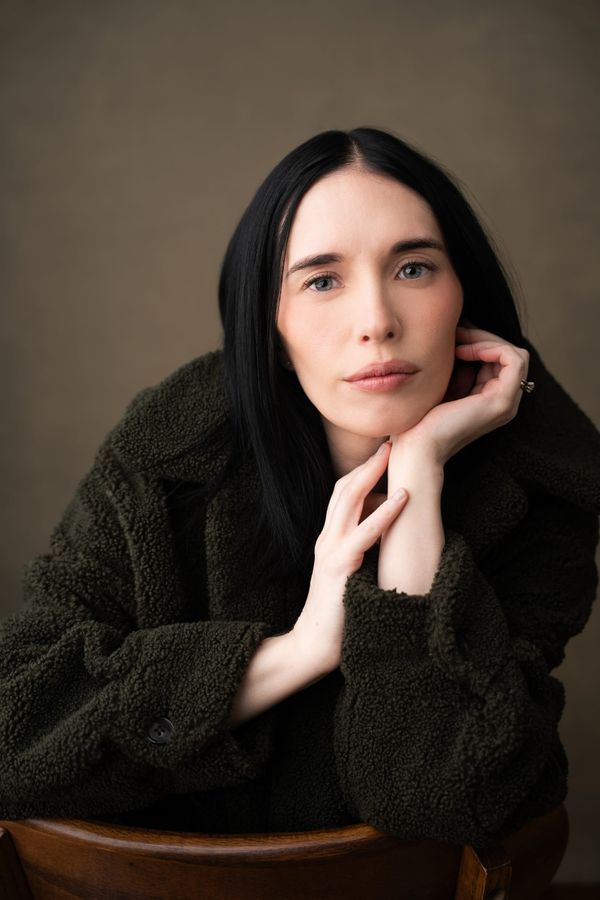
Stevie Nelson does two things for a living, and the longer you talk to her, the more they look like one. She writes screenplays about women who refuse the roles the world has written for them, difficult women, controversial women, women allowed to be both the hero and the villain of their own story. And she spends her working days inside the archive of early American cinema, recovering the names of the women who did exactly that a century ago and were written out of the record for their trouble. One job imagines new women onto the screen. The other proves the old ones were there all along.
That second job has produced a finding that should be better known than it is. In the silent era, by the count Nelson worked on, Hollywood employed roughly twice as many women writers as it did in the period after 1933. The women were not absent from the invention of cinema. They were pushed out of it. Nelson has spent years in the primary sources documenting both halves of that sentence, and she writes her own scripts in the full knowledge of what came before. This is a conversation about where she started, what she makes, and what the archive gave back to her.
She was a writer long before she had the career for it. "My love for the written word began before I could form letters on the page," she says. As a small child, she was transfixed by handwriting itself, the recipes scrawled in the kitchen, the birthday cards that arrived in the mail, all of it reading to her like a secret, hidden language she wanted into. She started writing at five, after spotting a puffy Aladdin journal in a store and begging her father until he caved. She still has it. It is barely legible, and she keeps it next to her favourite books. That journal, she says, led to a lifetime of journaling and a mild obsession with office supplies.
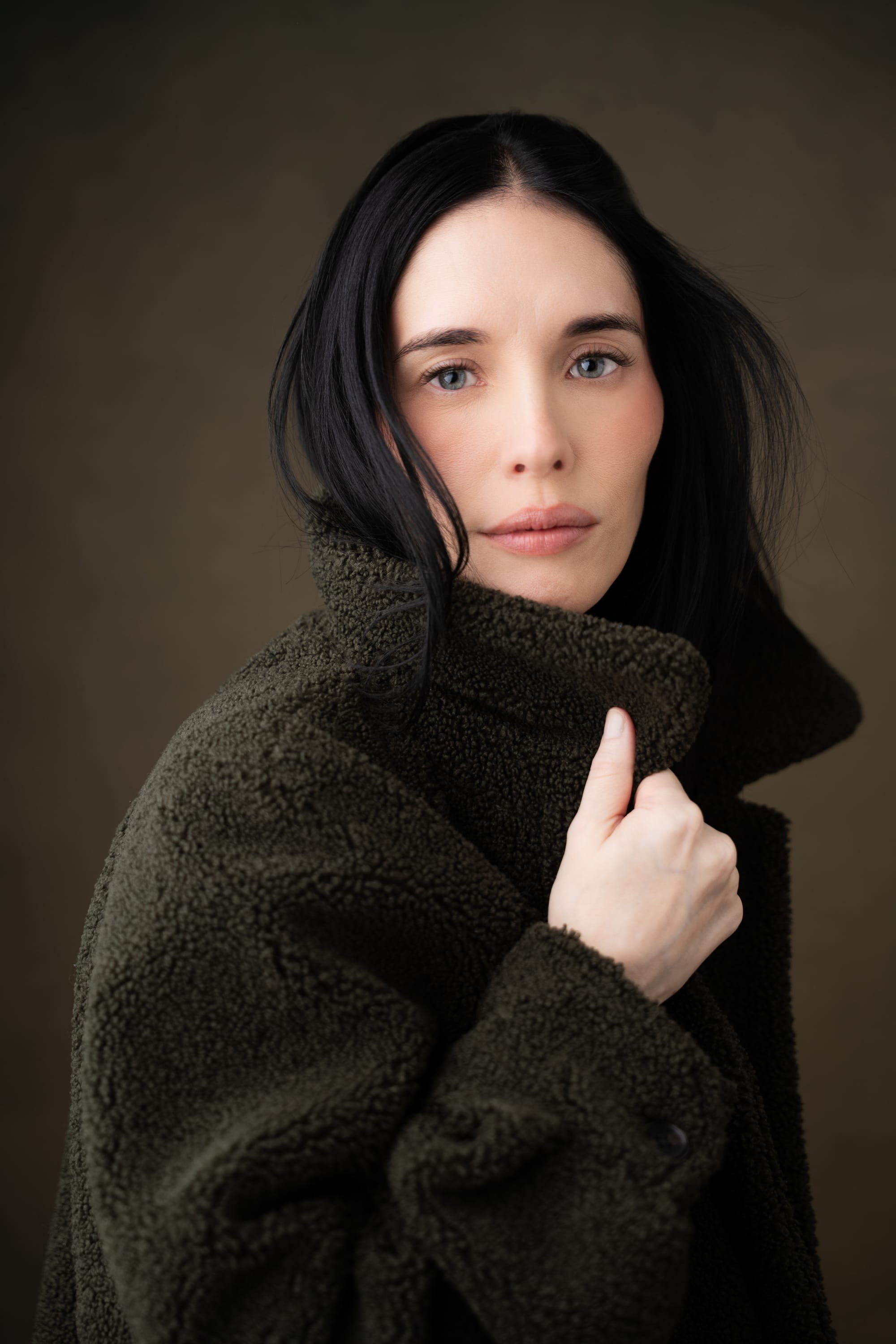
The career took a longer road. Writing was something Nelson kept hidden for years while she built a different life entirely, teaching herself to code without a bachelor's degree, starting as a receptionist at a small tech company and working her way up to web developer. It was a real achievement, and it made her unhappy. She went back for the degree, promising herself it was the only thing she would return to school for, and then her university closed and she had to find a new program. She was majoring in English at the time. An advisor, looking over a transcript packed with film classes, suggested screenwriting.
It spoke to her immediately. "From the start, I knew that I wanted to shape my life around it," she says. The structure of screenwriting, its rules and constraints, exercised her creative muscles in a way she found exciting rather than limiting, and it carried her to a master's degree from Stephens College, where she worked alongside mentors who were working screenwriters themselves. That was the part that made it feel real. "Working with professional screenwriters made the career feel tangible," she says. "It was life-changing in all the best ways."
Ask her what kind of stories pull at her and the answer is specific and unhesitating. "I'm drawn to stories where women break the mould," she says. "Female characters with controversial behaviour are often reduced to side characters. But I love exploring them as main characters. I like when women disobey societal norms and break away from generational trauma." What fascinates her most is the relationships between women, and the power that moves through them in ways the camera rarely bothers to notice. "Power struggles are sometimes hidden, existing between the cracks of everyday life," she says. "No matter what happens, women make sure the world keeps moving, whether it's meal planning or scheduling a vet appointment." We deserve to see the nuance of all of it on screen, she argues, because women's internal lives are so often distilled down to the role they occupy inside the home.
Her pilot Cultivation is where that instinct takes its sharpest form. It has been described as Gilmore Girls meets Hereditary, a collision so specific it sounds engineered, and in a sense it was. Nelson keeps what she calls a broad mental Rolodex of film and television, and she likes connecting things across genres that were never meant to touch. She loves the warmth of Gilmore Girls, and she loves the dread of Hereditary, and when she set out to write a horror script she wanted the fast, affectionate banter of Lorelai and Rory built on top of something rotten. "Instead of a healthy foundation, I built the mother-daughter relationship on secretly held trauma," she says. Cultivation is about the hunger for a perfect family in the wake of real damage, and the way red flags get filed away and ignored. "When love and validation are mistaken for safety," she says, "the mother-daughter duo becomes trapped in an unsafe scenario that devolves into spiritualist horror."
The spiritualist thread came from history, as her threads often do. Nelson had been reading about Cora L. V. Scott, who began working as a medium in 1852 at the age of twelve, with her own father acting as her manager. The dynamic struck her as a story in itself, a parent and a child bound together inside the child's supposed gift. She was on what she estimated was her millionth rewatch of Gilmore Girls at the time, and the two things fused. "I thought, what if that was Rory and Lorelai?" she says. Flipping through the Rolodex, she realised that Hereditary and Gilmore Girls share a structure hiding in plain sight: both turn on the complicated relationships of three generations of women. The idea bloomed and would not leave her alone. "The rest, as they say, is herstory."
The response has outrun her expectations. "I'm very grateful that people love the script as much as I do," she says. The recognition from FilmQuest means a great deal to her, and there is a detail she clearly treasures: the awards fall on Halloween, her favourite holiday, which she calls the icing on the cake.
Horror, for her, is not a detour from writing women well. It is the best available room to do it in. "I like horror because it's an expansive genre," she says. "It gives women space to be their best and worst selves. It's a space where women can evolve from heroes to villains, or vice versa. Women in horror are allowed to occupy more than one archetype." It is also a genre with the nerve to look directly at what other films flinch from. She points to the moment that marked her: watching Carrie in its 1976 form and seeing menstrual blood on screen for the first time. "It was groundbreaking," she says, and she means it as both memory and argument.
If horror is where Nelson imagines women forward, the archive is where she tracks them backward. Her historical research focuses on films released before 1934, which makes her, in practice, a specialist in silent cinema. She has worked on two projects for the American Film Institute's historic catalog, and both set out to widen a record that had been drawn too narrowly for too long. She came to the work almost by temperament. During grad school she learned that the AFI Catalog's entries were researched by hand, lovingly and painstakingly, and something in her recognised the fit at once. "I love Hollywood history, and I excel at research," she says. Her training came directly from the catalog team, and she was brought back as a full-time member after graduation.
The first project, Behind the Veil, was an effort to write short films back into a history that had mostly ignored them. Scholarship had long fixed its attention on features, overlooking the shorts that were faster and cheaper to make, and that gap turns out to matter more than it sounds. "Short films were different from features because there were fewer barriers to entry," Nelson explains. "This meant that they could be more welcoming for women and BIPOC creators." Some of what she found was personal, even experimental. The constraints were real: of a list of 45,000 films, only 6,000 could be researched within the study's limits, so even the recovered record is a fraction of what is out there.
The second project, Women They Talk About, went straight at the silent era's unrecorded women. "We aimed to uncover the role of women in the creation of American cinema," she says. Again, the team could only reach 6,000 feature films over several years, and even so they documented the contributions of more than 800 women. For Nelson, this was not an abstract exercise. "Women are rooted in the invention of cinema," she says. She reaches for the foundational example: the first narrative film is credited to Alice Guy-Blaché in 1896, whose short The Cabbage Fairy sits at the very start of the medium. The point of the work, as she describes it, was to build awareness and scholarship around how central women were to shaping cinema, not at its margins but at its origin.
Which brings us back to the finding that stops you cold: the silent era's roughly doubled share of women writers compared to the years after 1933. What happened? Nelson is careful not to flatten it into a single villain. "There were many factors at play after 1933," she says. "Wall Street and the studio system fundamentally restructured Hollywood, and every woman's experience was different." Rather than hand over a tidy thesis, she points to a life. To follow a woman's path from the silent films through the arrival of sound, she recommends Frances Marion, whose career spanned exactly that transition, and the book she loves on the subject, Cari Beauchamp's Without Lying Down: Frances Marion and the Powerful Women of Early Hollywood.
The archive's real pleasure, for her, is in the names almost nobody knows. She wishes the team could have reached every film on the list, because early cinema is, in her words, an untapped well of inspiring stories. She lights up recalling a few. Lillian St. Cyr, who played Princess Red Wing and worked as both an actress and a consultant, was, to Nelson's knowledge, the first Native American actress to appear in a silent film. Dr. Lillian Delger Powers, who studied under Freud and then returned to New York to raise squirrels and make movies about them, building a life entirely on her own terms. And the genuinely startling Clara Smith Hamon, who in 1921 was tried and acquitted for killing her lover, Jacob L. Hamon, and who then set out to make a film about his death, a relentless filmmaker working straight through national censorship.
The reason all of this matters now is that, for Nelson, it's the simplest part of the conversation. "Women helped shape Hollywood," she says. "They were fearless pioneers with big ideas. From the dawn of cinema, women worked as editors, writers, directors, stunt performers, and actors. You name it, women have done it." Remembering them, she argues, forces a wider frame, one that has to include the BIPOC and LGBTQIA+ filmmakers written out of the same record, because, as she puts it plainly, cinema is for everyone.
The two halves of her working life, it turns out, are in constant conversation. "My research and screenwriting go hand-in-hand," she says. A piece of history will often hand her an idea; once she has a logline, she uses research to support a character's journey, and when history is baked into a concept from the start, she uses it to generate conflict or a particular tone. When she writes a period piece, she admits to a favourite indulgence: women with anachronistic attitudes and motivations, characters who refuse to sit still inside their era. It is, when you think about it, the same woman who breaks the mould in her horror scripts, now set loose in the past the archive keeps handing her.
For anyone who finishes this wanting to go further, Nelson is generous with the map. She points first to the Women Film Pioneers Project, a trove of biographies and peer-reviewed writing on women in early cinema around the world, and to the 2018 essay collection When Women Wrote Hollywood, edited by Rosanne Welch. For digging into a specific film, she works from digitised primary sources: copyright documents, often holding a synopsis and sometimes a cast list, are free on the Library of Congress website; Lantern collects digitised books and magazines from the histories of film, broadcasting and recorded sound; and she uses ProQuest for archived newspapers through her local library. For films with no copyright and little trade coverage, even old advertisements and reviews can be reassembled into a record.
You can follow Nelson's own writing and research at stevielnelson.com, and her real-time adventures on Instagram at @stevielnelson.
Written by

Comments