Festival season is in full swing, and it has already introduced us to some awards-season contenders. The Venice Film Festival and Telluride Film Festival both opened this week, with the Toronto Film Festival following suit on September 10th. This powerful trio launches nearly every eventual Oscar contender, and what happens on the Lido and in the Colorado mountains this week shapes the entire race ahead.
Two Festivals, Two Very Different Worlds
Being among the best-known film festivals is about the only similarity Venice and Telluride share.
The Venice Film Festival is all about the glamour: lavish red carpets, star sightings left and right, and televised ceremonies. Films there compete for the Golden Lion, the lineup is known in advance, and the festival is open to the public, so everyone can enjoy the films presented that year.
Telluride, on the other hand, is its secretive industry sister. No lineup is announced ahead of time; the film titles are released only the day before the festival begins. Passes start in the $800 range, and the majority of attendees are said to be industry power-players and awards voters. The festival issues no press passes – a deliberate choice, so as not to overwhelm the small mountain town with a swarm of cameras — and the dress code is surprisingly "cowboy," with flannels and jeans preferred. Telluride is small, remote, and prestige-driven, beloved by cinephiles and awards strategists precisely because of the surprise.
Venice: The First Three Days, In Case You Missed It
In such a short time, the Venice Film Festival has already generated major buzz, with conversations ranging from the lack of female directors to the role of AI in the future of cinema. In case you missed the first three days, here's your summary:
The festival opened with a screening of Ink by Danny Boyle. The film received a five-minute standing ovation, which caught Boyle by surprise. "And then you think nobody's going to see this — it's about Britain, and it's about Fleet Street," Boyle joked afterward. Ink currently sits at 85% on Rotten Tomatoes.
Claire Foy, Jack O’Connell and Guy Pearce receive a 4-minute standing ovation for “Ink” at the #VeniceFilmFestival. pic.twitter.com/zZM4xB4HQo
— Variety (@Variety) September 2, 2026
John Malkovich was fighting back tears after the premiere of Wild Horse Nine earned a standing ovation of 14 minutes and 44 seconds, according to Variety. Notably, Wild Horse Nine has begun its climb up the charts as an Oscar-nomination contender.
Raucous 14-minute standing ovation here at Venice Film Festival for Martin McDonagh’s Wild Horse Nine with Sam Rockwell and John Malkovich starring in a darkly comic buddy movie. pic.twitter.com/HVYVoHhWAb
— The Hollywood Reporter (@THR) September 3, 2026
Jury president Maggie Gyllenhaal raised what she called a "systemic issue," with only one female director in competition at this year's festival.
Only one film solely directed by a woman made the Venice competition this year.
— Filmoiselle (@Filmoiselle) September 2, 2026
Jury president Maggie Gyllenhaal, asked about it: "I guess it's finally become clear that men make better movies than women do." Then, seriously: "There's a systemic problem. It's harder for women to…
And George Clooney was honored with a Golden Lion for Lifetime Achievement, recognizing his contributions as an actor and director over the last 40 years.
George Clooney receives the Golden Lion for Lifetime Achievement at the 83rd Venice Film Festival. pic.twitter.com/zo1eYnTpIm
— Variety (@Variety) September 2, 2026
Telluride: The Surprises Are Just Beginning
Telluride opens its doors to lovers of film in just a few hours. True to its secretive nature, all we have so far is the freshly released main program – but it's a strong one, and historically, Telluride is where major Oscar players quietly debut. Past festivals launched or built early buzz for Nomadland, The Banshees of Inisherin, and 12 Years a Slave, so this lineup is worth studying closely.
A few titles already stand out. Fjord, Cristian Mungiu's Palme d'Or winner starring Sebastian Stan and Renate Reinsve, arrives fresh off its Cannes triumph. Martin McDonagh's Wild Horse Nine and Danny Boyle's Ink cross over from Venice, doubling down on their awards momentum. Ron Howard brings the documentary Avedon, Werner Herzog returns with Bucking Fastard (starring the Mara sisters), and legendary filmmaker Mike Leigh premieres Tender Loving Care. Documentary lovers also have Carl Sagan: We Are Made of Star Stuff and Elizabeth Chai Vasarhelyi and Jimmy Chin's Everest: The Other Side to look forward to.
The full main program includes:
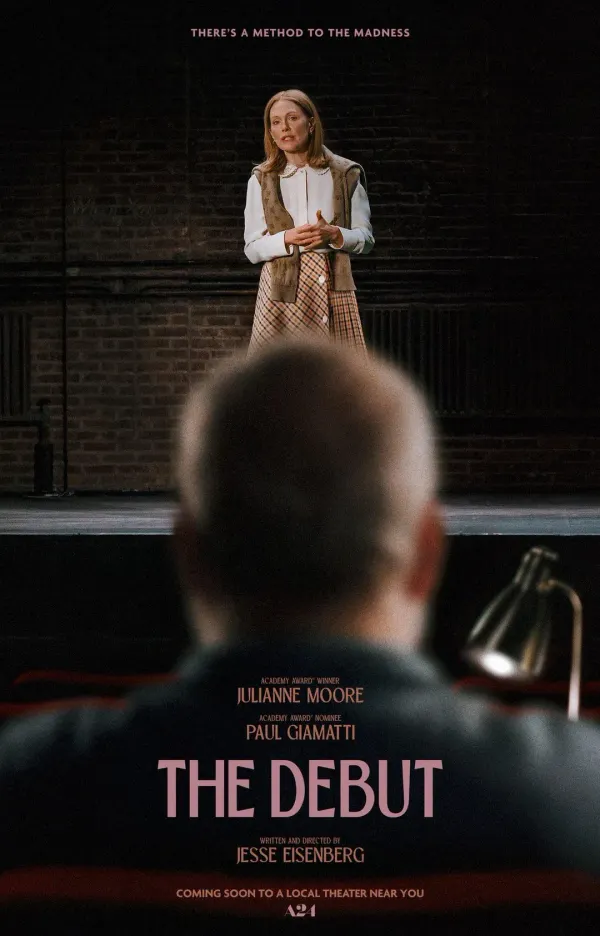
A Long Winter (Andrew Haigh), Act 3 (Christine Molloy, Joe Lawlor), Alpha Gang (David & Nathan Zellner), Avedon (Ron Howard), Bucking Fastard (Werner Herzog), Burgundy (Michael Dweck, Gregory Kershaw), Carl Sagan: We Are Made of Star Stuff (Nanette Burstein), Club Kid (Jordan Firstman), The Debut (Jesse Eisenberg), The Disciple (Joanna Natasegara), Elsinore (Simon Stone), Everest: The Other Side (Elizabeth Chai Vasarhelyi, Jimmy Chin), Fatherland (Paweł Pawlikowski), Fjord (Cristian Mungiu), Gentle Monster (Marie Kreutzer), The Idiot(s) (Małgorzata Szumowska, Michał Englert), Ink (Danny Boyle), La Bola Negra (Javier Ambrossi, Javier Calvo), The Liberation (Guy Nattiv), Making Marie Antoinette (Eleanor Coppola), The Man I Love (Ira Sachs) · Minotaur (Andrey Zvyagintsev), My Undesirable Friends: Part II – Exile (Julia Loktev), Once Upon a Time in Harlem (David & Liani Greaves), The Only Living Pickpocket in New York (Noah Segan), Pete Townshend: Behind Blue Eyes (Frank Marshall, Nigel Sinclair), Rehearsals for a Revolution (Pegah Ahangarani), Rose (Markus Schleinzer), The Row (Bryan Fogel), The Story of Documentary Film (Mark Cousins), Sumo: Spirit Weighs Nothing (Erik Shirai), Tender Loving Care (Mike Leigh), Tenzing (Jennifer Peedom), The Unknown (Arthur Harari), Wild Horse Nine (Martin McDonagh)
The Story the Numbers Tell
And here's where the two festivals diverge in a way that caught our eye.
At Venice, the gender gap is stark: only one of the twenty films in competition – May el-Toukhy's Woman Unknown – was directed by a woman. Out of competition, just nine of forty-seven titles were, and every one of them was a documentary. It's the exact problem jury president Maggie Gyllenhaal named on day one, when she called it a "systemic problem" and pointed out that "it's harder for women to get films financed." Festival director Alberto Barbera defended the selection by claiming the women's films submitted were of "lower quality" – a comment that drew swift backlash from film organizations who called the lineup "one-dimensional."
Telluride tells a different story. Look down its main program, and you'll find women directing or co-directing a notable share of the slate – Christine Molloy, Nanette Burstein, Joanna Natasegara, Elizabeth Chai Vasarhelyi, Marie Kreutzer, Małgorzata Szumowska, Eleanor Coppola, Liani Greaves, Pegah Ahangarani, Julia Loktev, and Jennifer Peedom among them. It's not parity, and one festival's lineup doesn't fix an industry. But it does quietly undercut the "quality" excuse: the films exist, the women directing them exist, and one festival found room for them while another insisted it couldn't.
So as the fall circuit launches the awards race, it's worth asking: whose films are getting the platform – and whose aren't?
 Daria Ershova
What Happens Next
From Venice and Telluride, the race moves on to Toronto (September 5–15), and then rolls through the fall, all the way to the Oscars in March. We'll be covering the whole circuit and more – so if you don't want to miss a thing, be sure to follow us on social media.
Written by
Comments